

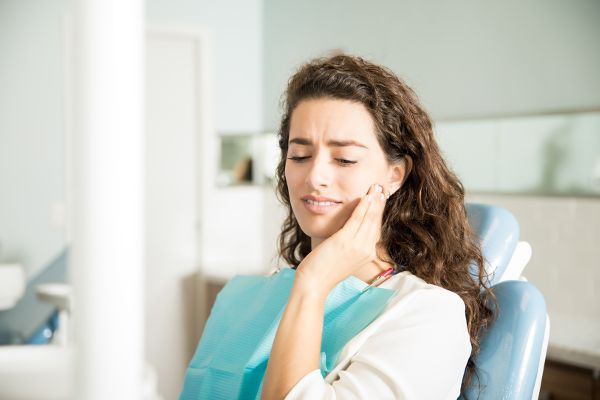


Sharp pain can strike without warning, turning everyday activities like eating or relaxing into uncomfortable, alarming experiences. Dental emergencies occur when a problem requires immediate professional care to avoid further pain, save a tooth, or prevent complications. These cases may be associated with serious symptoms that affect a patient’s everyday life and should be addressed immediately rather than waiting for a routine dental appointment. Although minor dental issues can be addressed in a relaxed mood during a regular appointment, pressing issues require emergency treatment to save not only your teeth but also your overall health.
Being able to distinguish between urgent and non-urgent situations helps you act appropriately when it matters most. In case you experience any of the following dental issues, contacting a dentist immediately can make a significant difference in maintaining comfort, functionality, and aesthetics. A prompt response often leads to simpler treatment, better outcomes, and even more successful results later on. This is because you avoid the continued agony or further complicated measures.
Dislocated, Extruded, or Avulsed Tooth
When an unexpected physical blow, like a sports collision or an accidental fall, moves your tooth out of its natural position, you have a dental emergency of high priority. You may find the tooth has lengthened(extrusion), pushed deep into the gum line (intrusion) or has left the socket completely (avulsion). All these situations indicate damage to the periodontal ligaments that support the tooth. The dentist will need to stabilize the root before your body begins rejecting the tooth. Early detection of this physical displacement will enable you to begin life-saving measures to help maintain the structural integrity of your smile.
This physical injury induces a critical time window, with the highest success rates occurring within the first 30 minutes, which is the reimplantation window. Now that you are caught in this situation, what matters is that the living cells on your tooth root will only survive as long as you are very careful with the specimen. Always handle the tooth by the crown (the biting surface), never by the root. This will prevent bacteria or mechanical trauma to the live fibers necessary for reconnection of the tooth. After cleaning the tooth, attempt to gently reposition it into the socket and apply biting pressure to a piece of soft gauze to keep it in place until you can reach an emergency clinic.
If you are unable to replant the tooth yourself, the outcome of the professional procedure is predetermined by the tooth’s hydration. The first thing you must do is use a special “Save-A-Tooth” kit, which has a balanced salt solution. A plain container of cold milk can be used as a biological alternative. At all times, you should not use tap water. It contains many chemicals, which raise pH levels, and it can damage root cells due to unfavorable osmotic conditions. This makes the tooth untreatable, no matter how fast you get to the dentist’s clinic.
Even differentiating between your permanent teeth and a baby (primary) tooth refines your emergency response. While an adult tooth demands every effort for preservation, you should never attempt to replant a knocked-out baby tooth. Forcing a primary tooth back into the socket risks bruising or infecting the developing permanent tooth bud residing directly beneath the gum line. In this particular scenario, your tooth preservation becomes secondary to protecting the developing permanent tooth. The priority is to control the soft-tissue bleeding and remove any broken tooth fragments still in the child’s mouth.
Facial Swelling and Abscesses
Once a local dental problem becomes an overt facial swelling, you are past a local toothache problem and into a health crisis. A dental abscess may initially present as a small pimple-like bump on your gums, which shows that there is an area of infection at the root of a tooth or between the gum and the tooth. Failure to heed this warning sign will lead to the bacteria spreading into the surrounding soft tissues of your face and neck through a breach in the jawbone. This development will turn a mere hole into a life-threatening condition. This is because the infection will take the path of least resistance through your body.
You should be aware of the warning signs that would indicate an ER intervention is required immediately. When your swelling extends up to your eye, makes your neck stiff, or even when your fever rises along with your toothache, the infection has spread to your bloodstream or into the deep corners of your face. You are at serious risk of having your airways blocked, like by Ludwig Angina, where the floor of your mouth swells so severely that it pushes your tongue up and backward. In case you cannot swallow or inhale, you are to bypass the dental office and proceed directly to an emergency room to clear your airway and take intravenous antibiotics.
The danger of an abscessed tooth extends far beyond the localized pain in your jaw. Unattended, the infection may spread through the bloodstream to vital organs, like the brain or heart, triggering sepsis or internal abscesses. This requires intensive surgical drainage. You should watch for signs of spreading, for example, warmth over the swollen area or an increased heartbeat, which indicate that your immune system is losing the war against the bacteria. By treating it early, before the swelling reaches your throat or eyes, you protect your vital organs from infection.
On the contrary, minor gum puffiness may often be treated without an emergency visit if a physical obstruction causes the irritation. Should you notice minor, localized redness after eating, you may first gently floss the area to remove any trapped debris. This form of irritation is not accompanied by the heat, throbbing pain, and spreading inflammation that are typical of an abscess. This non-emergency can usually be managed with saltwater rinses and better hygiene, and only emergency clinics should be used when you notice the swelling distorting your facial features or affecting your basic functions.
Spontaneous and Intractable Pulpitis
When you suddenly have a throbbing toothache with no physical cause, you are no longer dealing with simple sensitivity but an emergency of neurological origin. This spontaneous pain usually increases when you lie down, since more blood flows to the head, exerting extra pressure on a dying or inflamed nerve.
In the middle of the night, you may get jolted awake by a pounding pain that seems to have no end and cannot be suppressed even by over-the-counter painkillers. This degree of discomfort is an indication that the pulp, which is the living core of your tooth, has been irreversibly damaged by the destruction of nerves and blood vessels.
You need to distinguish between reversible and irreversible pulpitis to decide on your next steps. When you are in a reversible state, you may get a sharp, brief zing when taking ice water. This disappears soon after the stimulus is withdrawn. However, when this cold sensitivity lasts 30 seconds or longer and progresses to a dull, radiating, or travelling pain in your ear or jawline, you may well be experiencing pressure buildup from inflammatory processes. At this point, the inflammation is irreversible, and your body is no longer able to heal the internal damage. The trapped pressure in the hard shell of the tooth will only continue to increase until a dentist performs an emergency root canal or extraction.
These neurological red flags are usually overlooked, resulting in the death of the tooth. Once this occurs, the pain might be temporarily relieved only to recur as a serious infection. The nerve tissue decaying inside the root canal is producing a gaseous buildup that finds an outlet through the root’s apex and into your jawbone. You can detect this shift when the tooth is excruciatingly sensitive to any heat, but will be a little relieved when ice is applied to it- a typical symptom of advanced pulpitis. When you show up to the emergency department with an appointment request while the pain is still spontaneous and active, you have a better chance of a specialist saving the tooth structure before the abscess develops into a full-blown one.
Meanwhile, you could cope with minor, acute sensitivity without having to visit an emergency department with a change in your daily routine of hygiene. When you assume that you are experiencing a dead nerve when you drink something cold or have eaten something sweet, you are probably experiencing exposed dentin or even receding gums instead of a dying nerve. You can resolve this non-emergency situation by using a desensitizing toothpaste and avoiding any acidic triggers until your next checkup. The emergency clinic must be used during the red alert times of the pain that has not given in, despite your efforts to relieve it at home, and essentially interferes with your sleeping or functioning capacity.
Vertical Fractures and Exposed Pulp
The structural soundness of your smile is at risk the moment you experience a sudden mechanical problem, like a tooth splitting in half or a deep vertical crack. A vertical root fracture, in contrast to a minor surface crack, can continue downwards of the chewing surface, towards the gum line, literally dividing the tooth into two separate segments. You might feel a sharp, electric sensation whenever you release your bite, as the two halves of the tooth shift and irritate the underlying tissues. This form of trauma forms a direct pathway through which bacteria bypass your protective enamel and enter the sterile space of the jawbone.
You must inspect the center of the break for a specific “Red Flag”: a small visible pulp tissue, which may appear pink or red, visible in the middle of the white dentin. This pink spot is the area of your tooth which is called the pulp, which is the group of nerves and blood vessels that make your tooth alive. When you expose this pulp to the open air, the nerve begins to die almost instantly due to bacterial contamination and thermal shock. Any contact with your tongue, food, or even the breath of cool air will cause excruciating pain. This indicates that the biological seal of your tooth is broken and cannot be sealed at home.
This exposes you to a high risk of infection, since the natural bacteria of the mouth colonize the exposed wound within a few hours. An exposed nerve should be treated like an open medical wound, which needs an emergency root canal and crown, or splint to hold the remaining tooth. When you do not treat the inflammation promptly in the split segments, the bone around the area can be drawn back by the inflammation, making it very hard to place a dental implant or a bridge at that site. The faster you get to a dentist after your structural break, the better the chance he/she has to bond the broken pieces back together or even seal the nerve before it becomes untreatable.
Conversely, the extent of a structural emergency versus a small-scale aesthetic non-emergency is relatively easy to differentiate by the depth of the damage. When you have broken a porcelain veneer or have broken a little corner of your enamel, you will tend to find that you have a rough or jagged edge, but no internal bleeding or lingering pain. Annoying and visually irritating, these surface-level chips do not address the nerve or the root system and can be safely postponed to regular office hours. You should save the emergency visit for those deep, vertical splits where the internal “pink” tissue is visible, and the pain makes it impossible for you to bite down.
Find an Emergency Dentist Near Me
Your smile is one of your most valuable assets, and protecting it starts with knowing when a dental issue cannot wait. It is not only about your discomfort but also about making sure that your pain is not too severe, that you can save your teeth that might otherwise be lost, and that this infection does not become dangerous to your health. A minor situation can escalate into an expensive and complex one due to the lack of warning signs.
Do not second-guess intense pain, edema, hematoma, or injury. Acting quickly often means simpler treatment and better results. If you are facing a dental emergency, contact The Lakewood Dentist. Our professional staff is available to care for you as quickly and painlessly as possible, as well as to protect your smile. Contact us today at 562-423-1441 for prompt emergency dental care. Your comfort and health require immediate attention.